Natural Pesticides: How to Make and Use Them Safely
Modern farming increasingly relies on chemical pesticides for quick pest control. However, excessive use of chemicals damages soil health, harms beneficial insects, contaminates food, and affects human health. Natural pesticides offer a safe, cost-effective, and environmentally responsible alternative.
Made from common household and farm-available ingredients, these natural sprays help control pests while preserving ecological balance. Below are some of the most effective natural pesticides and simple methods to prepare and use them.
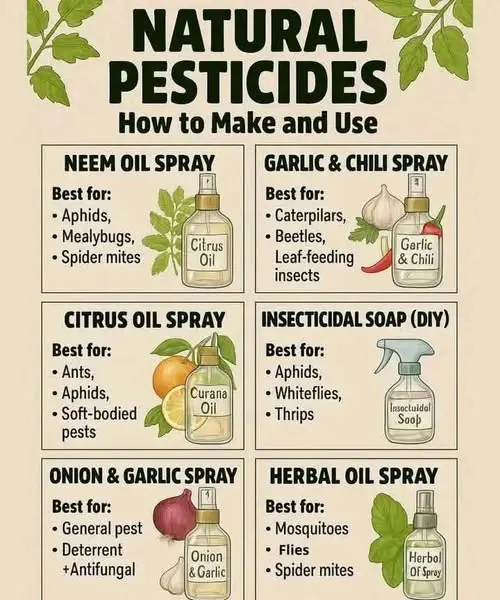
1. Neem Oil Spray
Best for: Aphids, mealybugs, spider mites
Neem oil is a powerful natural insecticide extracted from the seeds of the neem tree. It does not kill insects instantly but disrupts their feeding, growth, and reproduction cycle, making it especially effective against soft-bodied pests.
How it works:
- Prevents insects from feeding
- Blocks egg hatching
- Reduces pest population over time
How to prepare:
- 1 litre of water
- 3–5 ml neem oil
- A few drops of mild liquid soap (as an emulsifier)
Mix well and spray directly on affected leaves, especially the undersides.
2. Garlic & Chili Spray
Best for: Caterpillars, beetles, leaf-feeding insects
Garlic and chili contain strong natural compounds that act as powerful repellents. Their pungent smell and heat drive pests away without harming plants.
How it works:
- Repels insects through strong odor
- Irritates chewing pests and prevents feeding
How to prepare:
- Crush 5–6 garlic cloves and 3–4 chili peppers
- Boil in 1 litre of water
- Cool, strain, and spray on plant leaves
⚠️ Use gloves while handling and avoid contact with eyes or skin.
3. Citrus Oil Spray
Best for: Ants, aphids, soft-bodied pests
Citrus peels contain natural oils that are toxic to many insects. This spray is especially effective for controlling ants and aphids in gardens and farms.
How it works:
- Breaks down insect nervous systems
- Acts as a contact insecticide
How to prepare:
- Soak citrus peels (orange, lemon) in water overnight
- Add a few drops of liquid soap
- Strain and spray generously on infested areas
4. Insecticidal Soap (DIY)
Best for: Aphids, whiteflies, thrips
Insecticidal soap is one of the simplest and most effective natural pest controls. It kills insects by damaging their cell membranes and blocking respiration.
How it works:
- Suffocates insects on contact
- Safe for most plants when used correctly
How to prepare:
- 1 litre of water
- 1 teaspoon mild soap (no fragrance, no degreaser)
Spray directly on pests for best results.
5. Onion & Garlic Spray
Best for: General pest control, antifungal protection
This all-purpose spray combines the natural sulfur compounds of onion and garlic, making it effective against a wide range of insects and some fungal problems.
How it works:
- Strong odor repels insects
- Helps reduce fungal growth
How to prepare:
- Blend onion and garlic
- Boil in water, cool, and strain
- Spray as needed on crops
6. Herbal Oil Spray
Best for: Mosquitoes, flies, spider mites
Herbs such as mint, basil, and rosemary are natural insect repellents. Their aromatic oils are highly effective against flying pests.
How it works:
- Repels insects naturally
- Leaves a protective scent barrier on plants
How to prepare:
- Infuse herbs in oil for 24–48 hours
- Mix with water and strain
- Spray on plants and surrounding areas
Tips for Safe and Effective Use
✔ Always test the spray on a small portion of the plant first
✔ Apply early morning or late evening to prevent leaf burn
✔ Reapply after rainfall or heavy watering
✔ Use regularly for best long-term control
Why Choose Natural Pesticides?
- Safer for farmers and consumers
- Protect beneficial insects like bees and butterflies
- Improve soil health
- Support sustainable and organic farming
- Reduce farming costs over time
SaveAgri Perspective
Natural pesticides are not just an alternative—they are the future of sustainable agriculture.
With simple ingredients and mindful application, farmers can protect crops, preserve nature, and ensure healthier food for the next generation.
🌿 மூலிகைப் பூச்சிவிரட்டி
இயற்கை பாதுகாப்பு | குறைந்த செலவு | அதிக விளைச்சல்
🌱 ஏன் மூலிகைப் பூச்சிவிரட்டி?
✔ ரசாயன பூச்சிக்கொல்லிக்கு மாற்று
✔ மண் வளம் பாதுகாப்பு
✔ பயிர்களுக்கு நோய் எதிர்ப்பு
✔ நன்மை செய்யும் பூச்சிகள் பாதுகாப்பு
🍃 தேவையான இலைகள்
- வேப்பந்தழை
- பப்பாளி இலை
- வாதமடக்கி
- தூங்குமூஞ்சி
- வேம்பு உள்ளிட்ட உள்ளூர் மூலிகை இலைகள்
🪣 இலைக் கரைசல் தயாரிப்பு
1️⃣ இலைகளை நறுக்கி பெரிய தொட்டியில் போடவும்
2️⃣ முழுகும் அளவு தண்ணீர் சேர்க்கவும்
3️⃣ மூங்கில்தட்டு வைத்து மூடி வைக்கவும்
4️⃣ காற்றோட்டம் இருக்க விடவும்
5️⃣ 15 நாட்கள் ஊறவைக்கவும்
6️⃣ கரைசலை வடிகட்டி சேமிக்கவும்
🛢️ எண்ணெய் கலவை (முக்கிய கட்டம்)
👉 4 லிட்டர் இலைக் கரைசலுக்கு:
- 🥥 200 ml தேங்காய் எண்ணெய்
- 🌾 200 ml நல்லெண்ணெய்
- 🌿 200 ml வேப்பெண்ணெய்
➕
- 🐄 8 லிட்டர் மாட்டுச் சிறுநீர்
- 💧 120 லிட்டர் தண்ணீர்
➡️ நன்கு கலக்கவும்
🚜 பயன்படுத்தும் முறை
✔ பவர் ஸ்ப்ரேயர் / மோட்டார் மூலம் தெளிக்கவும்
✔ இலை, தண்டு, அடிப்பகுதி நன்கு நனைய வேண்டும்
✔ 7–10 நாட்களுக்கு ஒருமுறை
✔ மொத்தம் 5 முறை தெளிக்கவும்
🐛 பூச்சி கட்டுப்பாடு – எப்படி வேலை செய்கிறது?
🌾 நல்லெண்ணெய் → நோய் எதிர்ப்பு
🌿 வேப்பெண்ணெய் → பூச்சி இனப்பெருக்க தடுப்பு
🥥 தேங்காய் எண்ணெய் → பூச்சிகளை ஈர்த்து அழிப்பு
❌ தீங்கு விளைவிக்கும் பூச்சிகள் மட்டும்
✅ தேனீ, பட்டாம்பூச்சி பாதுகாப்பு
🌾 பயிர் நன்மைகள்
✔ இலைகள் பசுமையாக இருக்கும்
✔ வளர்ச்சி வேகம் அதிகரிக்கும்
✔ பூ, காய், கதிர் உற்பத்தி உயரும்
✔ ரசாயன செலவு குறையும்
✔ நெல்மணிகளில் கசப்பு இல்லை
🌍 SaveAgri செய்தி
“இயற்கையை காக்கும் விவசாயமே
நாளைய தலைமுறையின் பாதுகாப்பு.”
🌱 இன்று இயற்கை – நாளை வளமான விவசாயம்
🔖 Footer (Poster Bottom)
SaveAgri.org
🌾 Farming • Organic • Farmers Welfare
📢 Follow for more natural farming guides